Good Hyderabadi Biryani in the GTA: 5 Signs You've Found the Real Thing
Discover 5 expert signs of authentic Hyderabadi dum biryani in the GTA — aroma, rice, meat, spice balance, and the dum seal.
Why Knowing What to Look For Matters
If you have ever typed "good Hyderabadi biryani near me" into your phone and then felt disappointed by what arrived at your door, you are not alone. The GTA has no shortage of restaurants serving biryani, but authentic Hyderabadi dum biryani is a specific, disciplined craft — and most of what passes for it falls short in at least one meaningful way. The gap between a well-seasoned rice dish and a true dum-cooked Hyderabadi preparation is wide, and once you know what to look for, you will never settle again.
At Biryani Master in Mississauga, we have built our entire kitchen around these standards. But this article is not a sales pitch — it is a practical checklist you can carry into any restaurant or delivery order and use with confidence. Whether you are a lifelong biryani lover or someone just beginning to explore South Asian cuisine, these five signs will tell you immediately whether the biryani in front of you is the real thing.
Quick Answer
Authentic Hyderabadi dum biryani reveals itself through five clear indicators: a deep, layered aroma from whole spices and slow steam; long-grain rice that is cooked firm but not mushy; meat that is tender and well-marinated inside the grain; a restrained, balanced spice profile rather than heat alone; and visible evidence that the vessel was sealed during cooking. If a biryani passes all five, you have found the genuine article.
Sign 1: What Does the Aroma Tell You Before the First Bite?
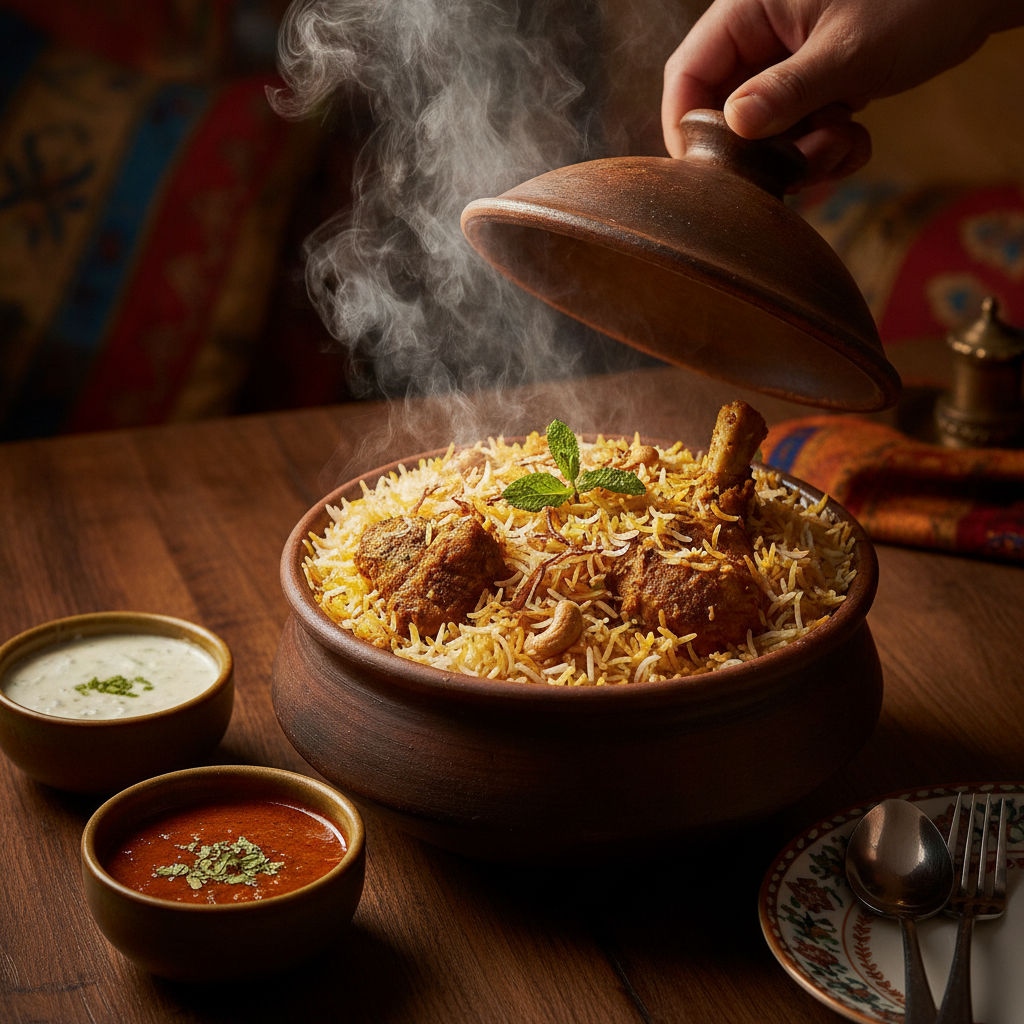
Aroma is the first and most honest signal of an authentic Hyderabadi biryani. A real dum biryani releases a layered, complex fragrance the moment the vessel is opened — one that carries warm whole spices, caramelised onions, saffron, and slow-cooked meat all at once, without any single note dominating.
This aroma is not manufactured by pre-mixed powder blends. It builds over hours inside a sealed vessel, as steam circulates and binds the fat from the meat, the starch from the rice, and the essential oils from spices like mace, star anise, green cardamom, and bay leaf. When those oils infuse slowly under pressure, the result is unmistakably different from a biryani where the ingredients were cooked separately and combined at the end.
If the biryani smells primarily of turmeric or artificial colour, or if it has no meaningful aroma at all, that is a reliable sign the dum process was skipped or rushed. A biryani with no smell is a biryani that was not given time — and time is the single ingredient that cannot be faked.
"In a proper Hyderabadi preparation, the aroma alone should tell you the story of the cooking process. Every spice added and every layer built should announce itself before you even reach for a fork."
At our kitchens, we use whole spices — never pre-ground blends — because the essential oils in an intact spice are far more potent and aromatic than anything that has already been broken down before cooking begins.
Sign 2: How Should the Rice Actually Look and Feel?
The rice in a genuine Hyderabadi biryani should be long, separate, and slightly firm at the centre — what cooks call a light resistance or "bite." If every grain is identical in colour, or if the rice is soft enough to mash between two fingers without pressure, the preparation did not follow dum principles.
Authentic Hyderabadi biryani is layered, meaning the rice and marinated meat are arranged in alternating strata and then sealed together. Because the rice finishes cooking inside the sealed vessel alongside the meat, it absorbs steam and flavour gradually. The result is rice that is neither undercooked nor overcooked — it holds its shape, pulls apart cleanly, and carries colour variation across the dish.
That colour variation is worth noting specifically. Authentic dum biryani will have grains ranging from white to pale yellow to a deeper saffron-orange. This is not decorative — it reflects which layer of the pot each grain came from and how the saffron-infused milk migrated during cooking. A uniformly coloured dish, particularly one that is bright orange throughout, suggests artificial colour was added after the fact rather than saffron working its way through natural steam.
The Basmati Standard
Hyderabadi biryani is traditionally made with aged long-grain basmati rice, which expands lengthwise as it cooks rather than bloating outward. Short or medium grain rice, while perfectly useful in other dishes, cannot produce the texture or visual presentation that defines a proper Hyderabadi plate. When you scoop a serving, the grains should cascade rather than clump.
Sign 3: Is the Meat Tender, Flavourful, and Properly Marinated?
The meat in a genuine Hyderabadi dum biryani should be tender enough to pull apart without force, and it should be flavourful from within rather than just coated on the outside. If the seasoning stops at the surface of the meat and the interior is bland, the marinade was either too brief or too weak.
The classic Hyderabadi marinade uses yoghurt, ginger-garlic paste, whole spices, and fresh herbs. This mixture works into the protein fibres over several hours, breaking them down gently while depositing flavour deep into the meat. When the marinated meat then cooks inside the sealed vessel with the rice, those flavours transfer further into the surrounding grains — which is why in an authentic biryani, even the rice adjacent to the meat carries a richer, deeper taste.
Overcooked, dry meat that falls apart into shreds is as much a red flag as meat that is undercooked and resistant. True dum cooking produces a specific texture: the fibre is relaxed, the connective tissue has softened, but the piece retains its structure. On the bone cuts especially — which are used in both our Hyderabadi Dum Mutton Biryani and our Hyderabadi Dum Chicken Biryani — the meat should release cleanly from the bone with moderate pressure.
Sign 4: Why Spice Balance Matters More Than Heat Level
Authentic Hyderabadi biryani is not about how spicy it is — it is about how balanced it is. The Hyderabadi tradition prioritises aromatic complexity over chilli heat, meaning the dish should feel warming and layered rather than aggressive.
A well-made biryani carries the warmth of whole spices in the foreground — cloves, cinnamon, cardamom, mace — with a gentle heat from chilli that builds slowly rather than hitting immediately. The finishing notes should include the brightness of fresh mint and coriander layered between the rice. That contrast between the warm and the cool, the aromatic and the fresh, is one of the defining characteristics of the Hyderabadi style.
If a biryani tastes primarily of raw chilli or an overwhelming amount of garam masala with no nuance beneath it, the spice balance was not managed carefully. Conversely, a biryani that tastes only of rice and salt — no depth, no aromatics — suggests the spice quantities were cut to save cost or simplify preparation.
At Biryani Master, we think of biryani the way a musician thinks of a composition: every element has a role, and when one is out of proportion, the whole dish suffers. This is what we mean when we say biryani is an emotion — it is not just food, it is the result of deliberate, caring attention to every layer.
Sign 5: What Does the Dum Seal Tell You About the Kitchen?
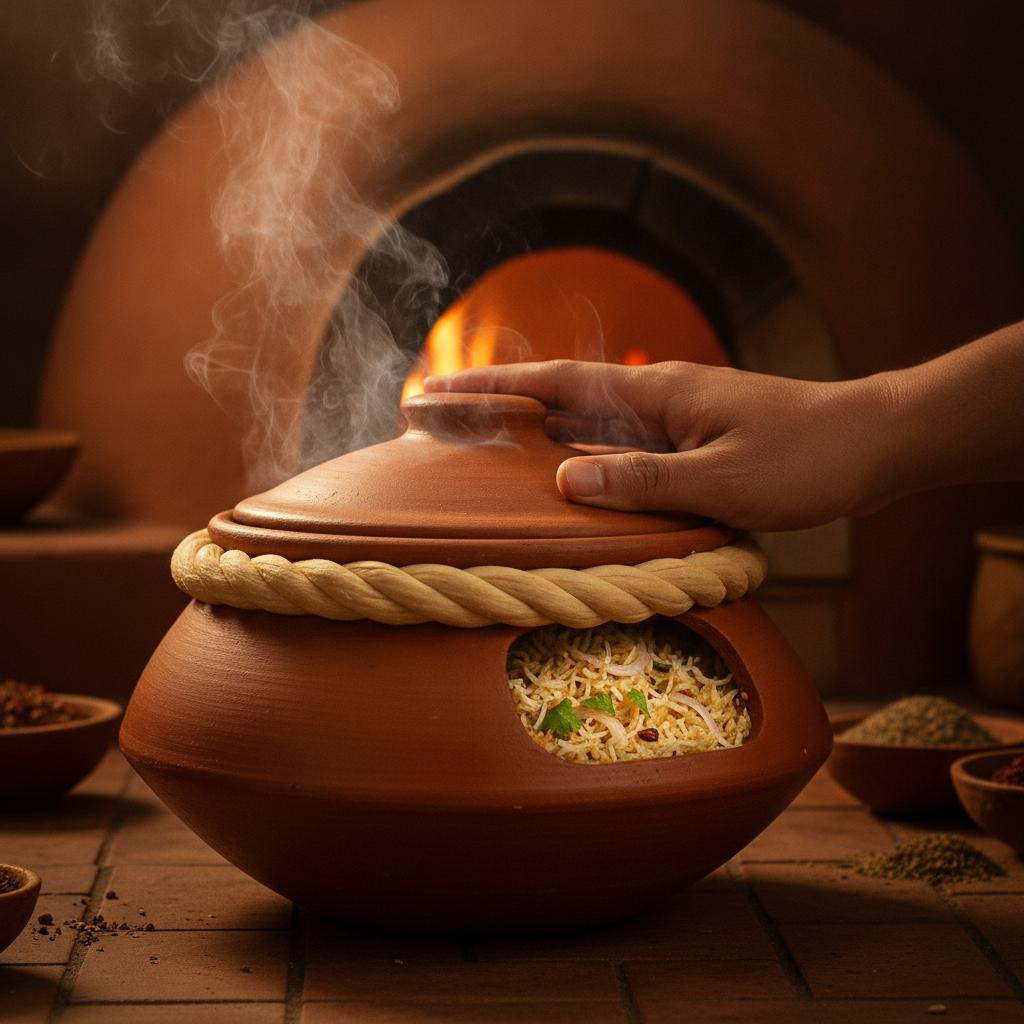
The dum seal is the most visible marker of an authentic preparation — and one of the most revealing things you can ask a restaurant about before ordering. Dum cooking requires that the vessel be hermetically sealed, traditionally with a layer of dough (called atta), so that steam cannot escape during the slow-cook phase.
This seal serves a specific purpose: it forces the steam to circulate internally, which is what produces the dramatic burst of aroma when the pot is opened at your table, and what gives the rice its distinct, slightly glossy texture. Without the seal, steam escapes freely during cooking and the internal pressure that drives flavour integration is lost.
Some restaurants use a tight-fitting lid rather than a dough seal, which can approximate the effect. Others do not seal at all and simply cook the biryani open or partially covered — this is the most common shortcut and one of the easiest to identify by result. The rice in an unsealed biryani tends to be drier, the colour more uniform, and the aroma significantly flatter when the dish is served.
When you are searching for the best Hyderabadi biryani near me and trying to evaluate options before visiting, it is a perfectly reasonable question to ask directly: does the kitchen seal the vessel during dum cooking? Any kitchen that takes this question seriously is one worth visiting.
Comparing the Biryani Styles on the Menu
Once you know the five signs of authenticity, the next step is choosing which style suits you best. At Biryani Master, we offer several preparations, each following the same core dum methodology but varying in protein, intensity, and finish. Here is a straightforward comparison to help you choose:
| Biryani Style | Protein | Flavour Profile | Best For |
|---|---|---|---|
| Hyderabadi Dum Chicken Biryani | Chicken (bone-in) | Aromatic, yoghurt-marinated, herb-forward | First-time dum biryani experience |
| Hyderabadi Dum Mutton Biryani | Mutton (bone-in) | Rich, deeply spiced, slow-rendered | Experienced biryani lovers who want depth |
| Chicken 65 Biryani | Crispy spiced chicken | Bold, tangy, with a textural contrast | Those who enjoy spiced-forward, vibrant flavour |
| Vegetable Dum Biryani | Seasonal vegetables | Light, aromatic, equally layered | Vegetarian diners wanting the full dum experience |
Where to Apply This Checklist in the GTA
The GTA's Indian food scene is genuinely diverse, and there are kitchens across the region that take biryani seriously. When you are searching for a good biryani near me and scanning your options, use the five signs as a quick mental filter before committing to an order.
Check the menu language: does the restaurant describe a dum process specifically, or is biryani simply listed alongside fried rice and noodles with no preparation detail? A kitchen that is proud of its method will say so. Look at customer reviews for mentions of aroma, layering, or rice texture — these are the details that biryani enthusiasts notice and record.
When you are searching for a Hyderabadi restaurant near me, proximity matters, but preparation philosophy matters more. A restaurant fifteen minutes further that seals its vessel and marinates overnight is worth the extra drive compared to a nearby place that shortcuts the process.
Our two kitchen locations in Mississauga were built on the principle that the recipe should never vary between sites. The same marinade timings, the same whole-spice blends, the same dum technique — every plate that leaves our kitchen, whether for dine-in, takeaway, delivery, or a catering event, has passed through the same set of standards. That consistency is something we consider non-negotiable, because biryani that surprises you differently each time is not a standard you can trust.
For larger events — corporate functions, family gatherings, celebrations — our Biryani Catering service and Party Trays bring the same kitchen standards to your venue. Many of our catering clients tell us they turned to us after being let down by generic catering options that could not produce the layered complexity that a dum biryani requires at scale. Scaling a dum biryani is genuinely hard, and it is one of the areas where a kitchen's real commitment to the craft shows most clearly.
Ready to Put the Checklist to the Test?
Come in for dine-in, place a takeaway order, or ask us about catering for your next event. At Biryani Master in Mississauga, every plate is held to the same five standards you just read about — aroma, rice, meat, spice balance, and the dum seal.
Order from Biryani MasterAbout the Author
Written by the Biryani Master Team, the culinary and content team behind Mississauga's authentic Hyderabadi dum biryani kitchen. We write about biryani the way we cook it: with care, specificity, and no shortcuts.
Frequently Asked Questions
How can I tell if a biryani was actually cooked using the dum method?
The clearest signs are a layered aroma released when the vessel is opened, rice that varies in colour from white to saffron across the same serving, and meat that is tender and flavoured from within rather than just on the surface. A kitchen using true dum cooking will also be able to tell you specifically that the vessel was sealed during cooking — if they cannot answer that question, the process likely was not followed.
What makes Hyderabadi biryani different from other regional styles?
Hyderabadi biryani is a kachchi (raw) dum preparation, meaning the marinated raw meat and parboiled rice are layered together and cooked simultaneously inside a sealed vessel. Most other regional styles cook the meat and rice separately before combining them. This difference in method produces a fundamentally different result: in the Hyderabadi version, the proteins from the meat, the starch from the rice, and the steam from the spice-infused marinade all interact during cooking, creating a much deeper integration of flavour.
Why does the spice level vary so much between different biryani orders?
Spice level variation usually points to inconsistency in the kitchen rather than a deliberate style choice. Authentic Hyderabadi biryani has a defined spice profile — aromatic whole spices with moderate chilli heat — that should be consistent each time. Wide variation between orders typically means the kitchen is not working from a standardised recipe, or that spice quantities are being adjusted informally. Consistent spice balance across multiple visits is one of the best markers of a kitchen that has genuinely mastered the preparation.
Can I order catering for a large event and still expect the same quality as a dine-in plate?
Yes, provided you choose a kitchen that has specifically developed a catering process for dum biryani at scale. Scaling dum cooking requires larger vessels, adjusted timing, and careful temperature management during transport — all of which are different from a single-plate dine-in order. At Biryani Master, our catering and Party Tray preparations follow the same core recipe and dum process as our dine-in menu, adapted for volume without compromising the fundamentals. Asking your caterer directly how they maintain the dum seal and layer structure at large quantities is a fair and important question before you confirm a booking.